Acoustic treatment
CA-REF-CP
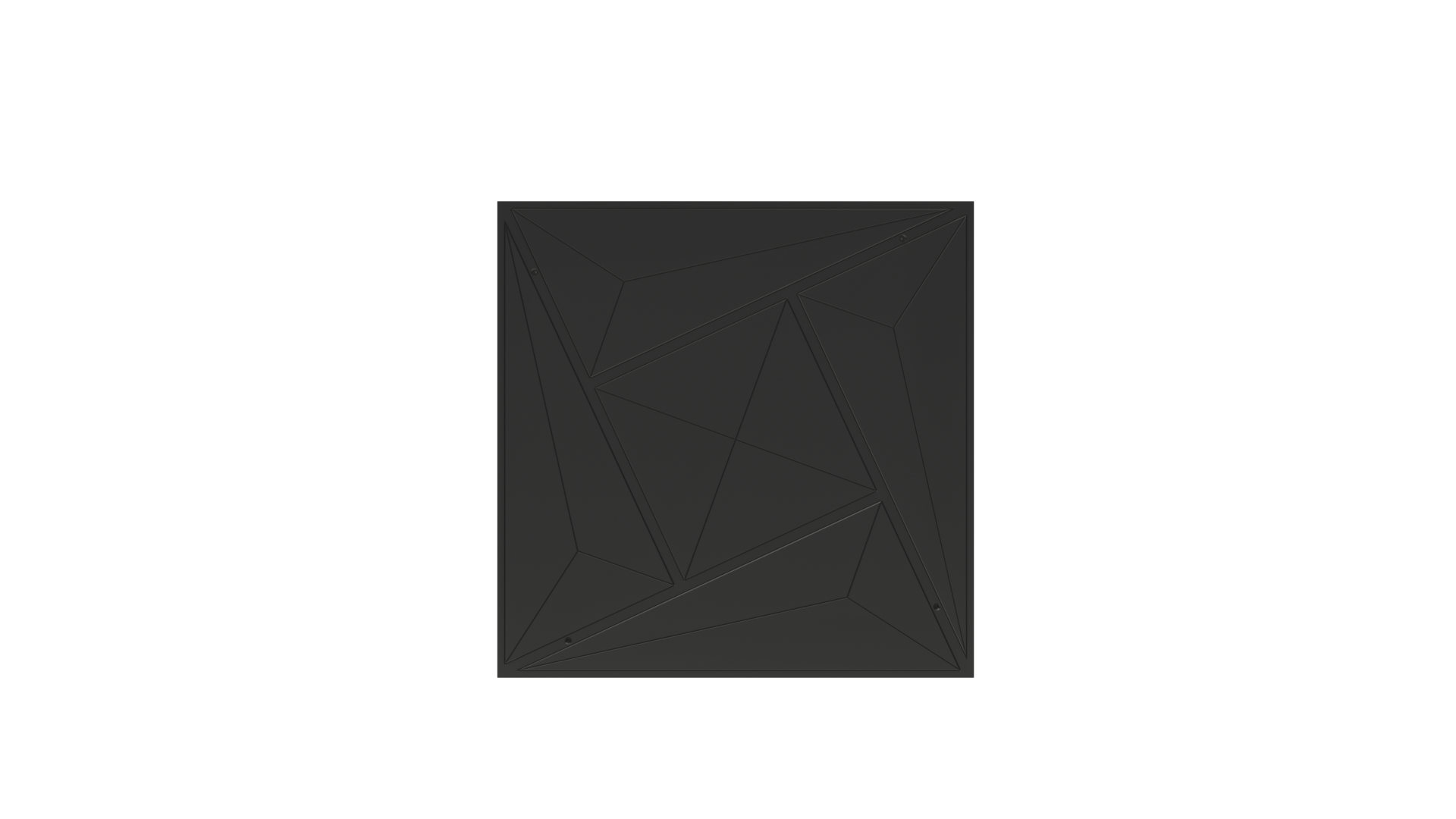
Reflection Control Panel
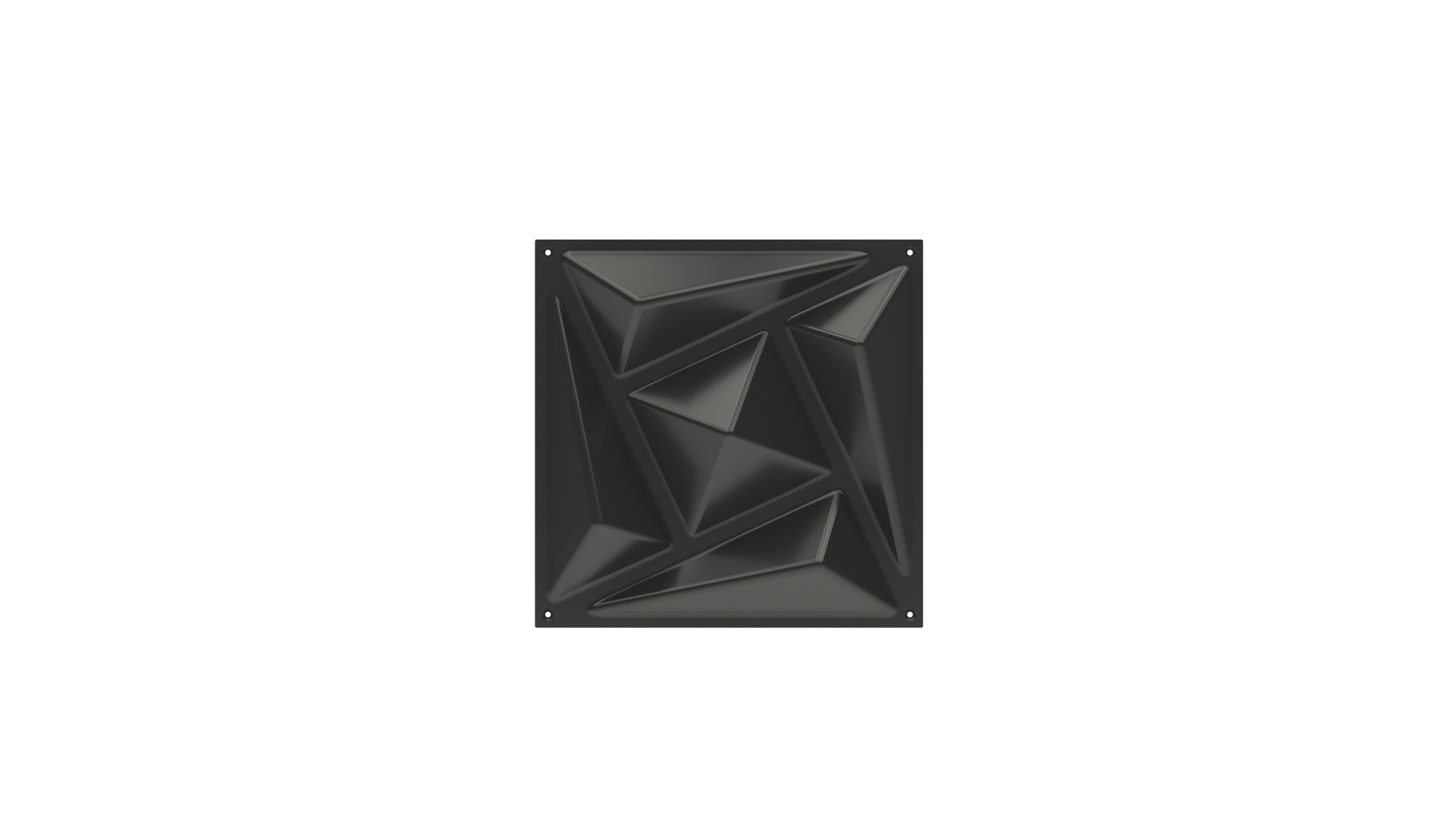
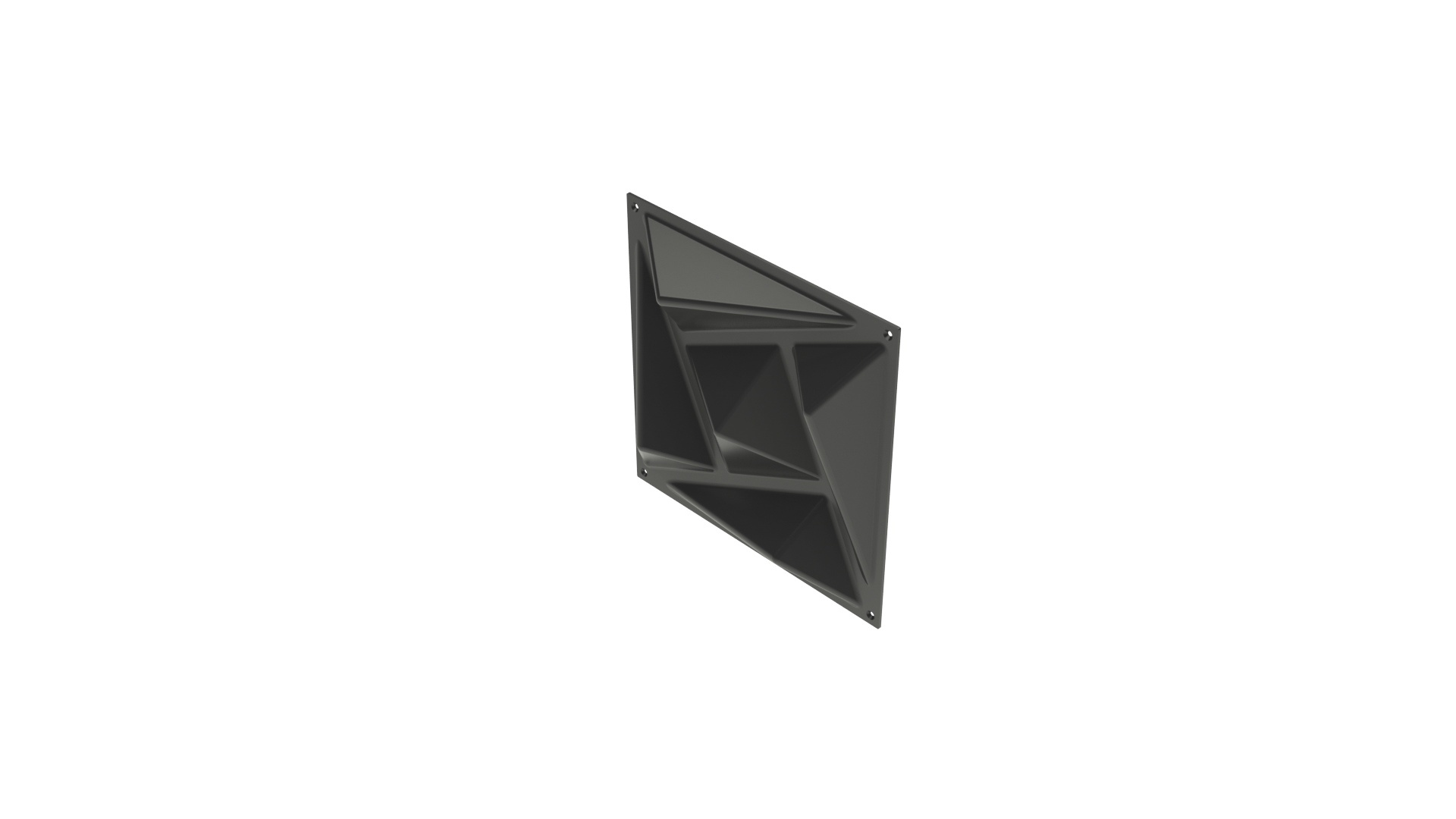
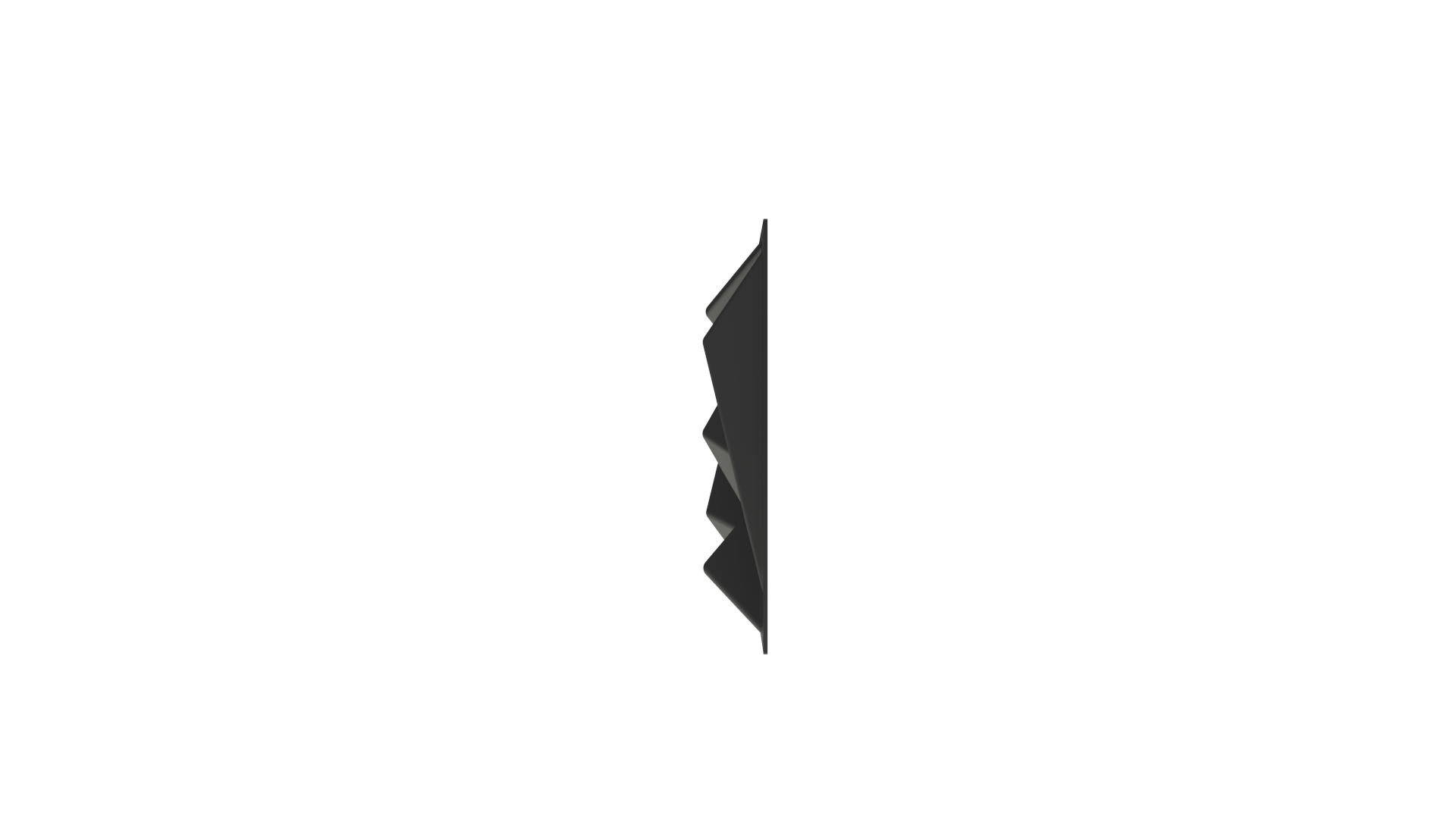
A faceted, injection-moulded panel that redirects reflected sound away from the listening position.
Scatters: redirects reflected energy off-axis. It does not diffuse, and the word is not to be used. Diffusion has a specific meaning under ISO 17497 that this does not claim.
Price on application
- Time and labour saved
- Time saving is not the point: C-ATS is no more and no less labour intensive than other acoustic treatment products. The advantage is a known performance, in the minimum space, worked with confidence. Whole-box quantities: every box covers 1.44 m2, so take-off arithmetic is trivial and a dealer orders in whole boxes. With an aperiodic layout the relative positions are what perform, so set out from the design drawing: laser accuracy is not required, but an arrangement must not be substituted, and a run moves as a whole rather than panel by panel.
- What it replaces
- Deeper competing scatterers that cost floor area; commodity foam used at reflection points, which is the wrong device for the problem; and doing nothing, which is the commonest alternative.
Specification
Physical
- Face size
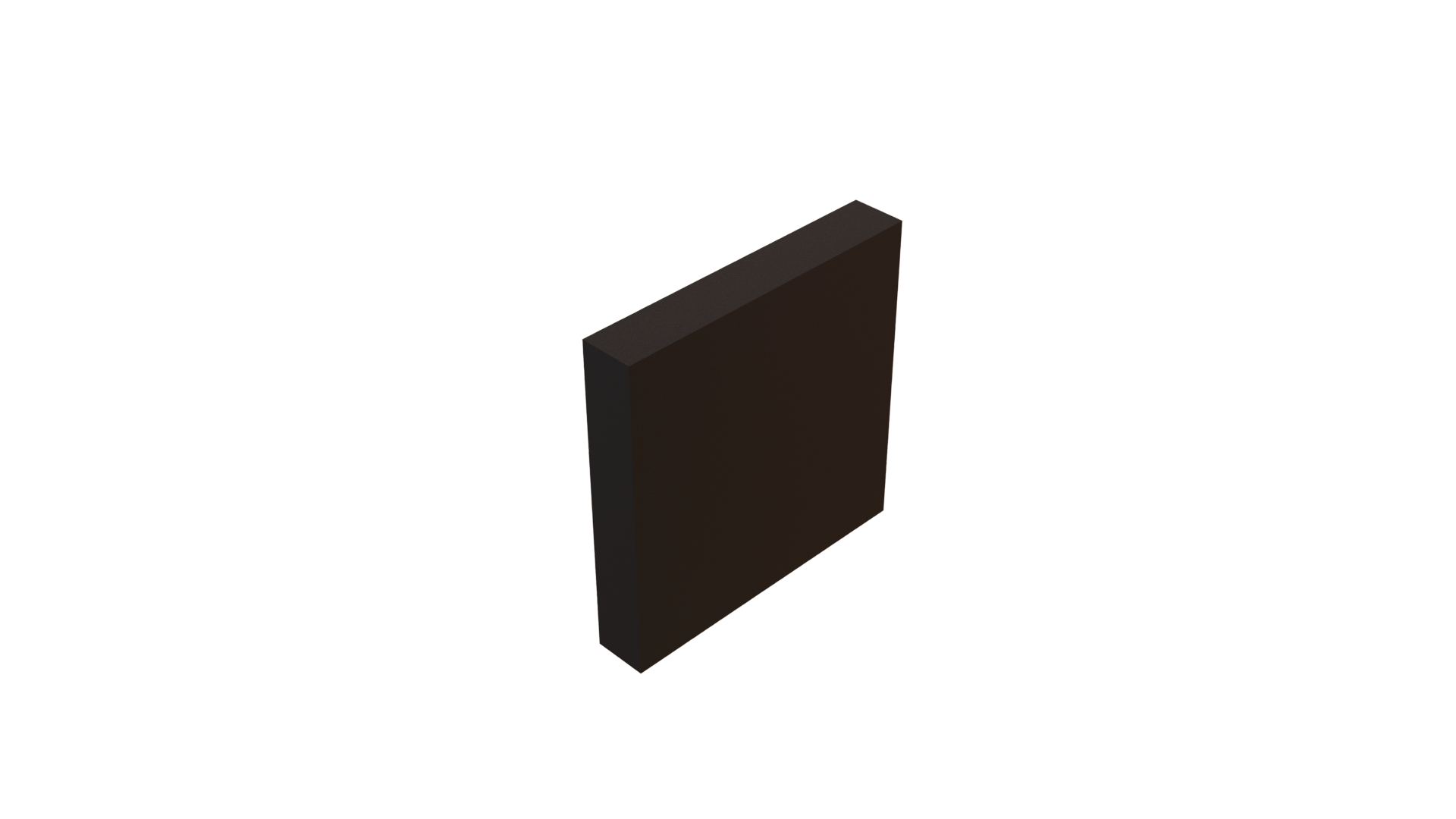
- 300 × 300 mm
- Depth
- 50 mm
- Area
- 0.09 m2
- Weight per panel
- 0.339 kg
- Panels per box
- 16
- Coverage per box
- 1.44 m2
- Box dimensions
- 340 × 320 × 150 mm
- Box weight
- 6 kg
- Face material
- 3 mm injection-moulded ABS
Mounting
- Fixing
- Moulded countersunk holes
- Fixings per panel
- 4 × 3.5 × 25 mm bugle-head black drywall screws
- Substrate required
- Flat substrate
Acoustic
- Measured as
- Absorption coefficient
- Test standard
- BS EN ISO 354:2003
- Test report
- BSRIA 100241/1
- How it works
- A rigid faceted surface geometry, most active around 500 Hz, breaking up the specular reflection from side walls, rear wall and ceiling.
- What it is for
- First-reflection points: side walls between screen and prime seat, rear wall behind the heads, ceiling.
- What it is not for
- Absorption. It is a reflector, and treating it as an absorber is the misapplication to guard against. Not a bass or reverberation solution.
- Limits
- The lowest panel in a block should sit no higher than 30% of room height off the floor. Rooms over 3 m tall need proportionally more.
Measured absorption
Absorption coefficient by octave band
- Type A, adhesive-bonded (recommended; modelling default) Legacy CATS Calculator, entry 3084
- Type B, free/unfixed BSRIA test 6, plane absorber, 16 tiles, 1.44 m2, centre of room
Specifying it
- Scope of supply
- 300 x 300 x 50 mm panel, 0.09 m2 each; 16 per box = 1.44 m2; 3 mm injection-moulded ABS; moulded countersunk fixing holes.
- Boxes and coverage
- Every box covers 1.44 m2. Quantities round up to whole boxes: a dealer buys full boxes.
- Configuration
- One size. Two install types, and they are acoustically different.
- Where it sits
- Behind a stretch-fabric finish, concealed. Any fabric system works; Fabric Walls pairs well and is not a dependency.
Installing it
- What it needs from other trades
- A flat substrate; 4 x 3.5 x 25 mm bugle-head black drywall screws per panel; builder's adhesive if bonding; a concealing fabric layer if the room is finished.
- The two install types
- Type A, adhesive-bonded (recommended, and the modelling default): the adhesive bonds the panel centre and damps its resonance, so it absorbs less and works as a clean scatterer. Type B, screw-only: the panel is free to resonate, adding an absorption peak, so it absorbs more than the design assumed. An installer following instinct will screw it and skip the glue, and the room then behaves differently from the design. Highest-return documentation item in the range.
Evidence and claims
- Test basis
- BSRIA Report 100241/1, BS EN ISO 354:2003, BSRIA Bracknell, 210 m3 chamber. Tested 24 July 2019, reported 3 March 2020, free/unfixed mounting. Design-stage reference figures, not installed-effective values.
- What is supported
- Measured absorption per BSRIA Report 100241/1, BS EN ISO 354:2003; 50 mm depth; scattering at first-reflection points.
- What is not claimed
- Diffusion, ever. No scattering-coefficient claim either: ISO 17497 scattering data has not been measured.
Published data
- Datasheetdatasheet
- Drawingdrawing
- Test Reporttest_report